Vacuum system drop-hammer impact tester

Other Videos
November 01, 2023
Category Connection: Drop Hammer Test Equipment
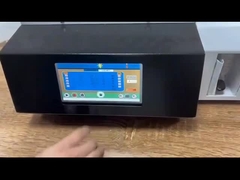
Brief: In this video, learn how the XJL-630S vacuum system drop-hammer impact tester can streamline your workflow and improve reliability for testing PVC-O and other non-metal pipes up to DN630mm. Watch a demonstration of its fully automated operation, including automatic hammer release via vacuum adsorption, secondary impact prevention, and real-time parameter display on the industrial control panel.
Related Product Features:
  • Fully automated control system prevents secondary impacts and automatically handles hammer positioning and sample alignment.
  • Utilizes vacuum adsorption for rapid hammer release and capture, achieving speeds up to 2 m/s.
  • Impact height is adjustable from 200mm to 2000mm with a calibration accuracy of ±1mm.
  • Industrial color HMI and PLC distributed control ensure high operational reliability.
  • Complies with multiple international standards including GB/T, ASTM, ISO, and BSEN.
  • Equipped with independent impact hammers for various energy levels, enhancing longevity and ease of selection.
  • Features power loss protection and real-time display of parameters like impact height and running speed.
  • Safety protection meets 89/392/EEC standards for secure testing environments.
Faqs:
  • What types of pipes can this drop-hammer impact tester be used for?
    It tests various non-metal pipes, including PVC-O, PVC-U water supply, sewage, gas, communication pipes, and hard plastic plates, up to DN630mm in diameter.
  • How does the vacuum system enhance the testing process?
    The vacuum adsorption principle enables fast and reliable hammer release and secondary capture, with hammer speeds reaching up to 2 m/s for efficient and accurate impacts.
  • What safety features are included in this testing machine?
    It includes automatic door closure detection, secondary impact prevention, and safety protections that comply with the 89/392/EEC standard to ensure operator and equipment safety.
  • What is the accuracy of the impact height setting?
    The impact height can be set from 50mm to 2000mm with an error of ≤±2mm and automatic calibration accuracy within ±1mm of the set height.